
Infrared thermography identified abnormal heating within engine-room electrical panels, allowing potential connection and contactor problems to be highlighted before corrective servicing.
The No.4 ER Vent Fan panel recorded a maximum temperature of 70.2°C against a 25°C ambient temperature. The report calculated a 45.2°C temperature difference and identified this as a thermal anomaly.
The Problem
Electrical-panel defects are not always obvious during a normal visual inspection. Infrared thermography was used during the condition-monitoring inspection to identify abnormal temperature patterns while the equipment was operating.
Maximum Temperature
Temperature Rise
Second Hotspot
Corrective Recommendation
Results
- Infrared thermography identified abnormal heating in two engine-room electrical panels during operating conditions.
- The most significant hotspot reached 70.2°C — 45.2°C above the recorded ambient temperature of 25°C.
- Green Sails pinpointed the affected contactor and cable connections and provided specific servicing recommendations.
Infrared thermography makes abnormal heat patterns visible before they become obvious through conventional inspection. In this case, measured thermal anomalies allowed specific electrical connections and contactor components to be identified for servicing.
Infrared thermography makes abnormal heat patterns visible before they become obvious through conventional inspection. In this case, measured thermal anomalies allowed specific electrical connections and contactor components to be identified for servicing.
Technical Inspection
Infrared Inspection Approach
Infrared thermography was carried out as part of an engine-room condition-based maintenance inspection. Thermal images were recorded from electrical panels to identify localised temperature differences and components operating significantly hotter than their surroundings.
The report recorded thermal measurements together with ambient conditions, emissivity settings, maximum and minimum temperatures, and equipment-specific observations.
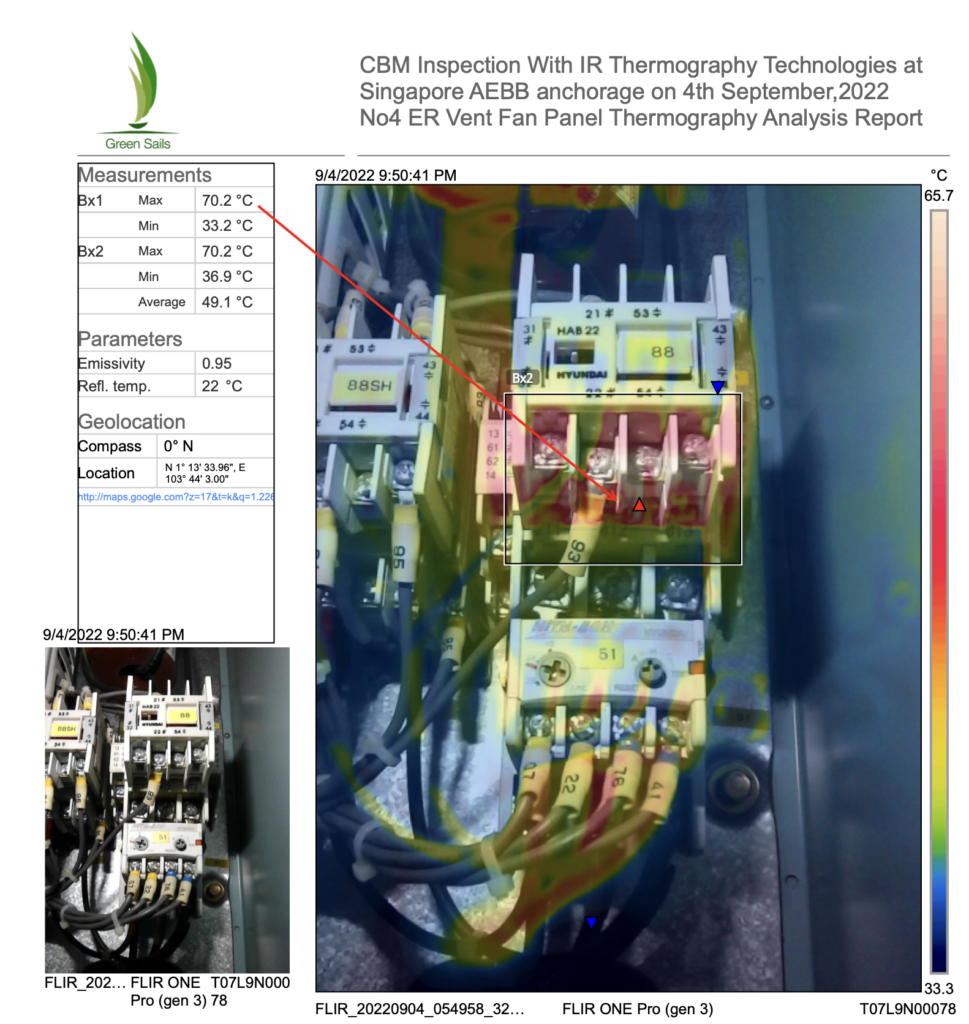
Finding 01 — Progressive Heating at the Vent Fan Panel
The No.4 ER Vent Fan panel was documented across several measurements.
An earlier image recorded a maximum temperature of approximately 37.1°C. A subsequent measurement reached 59.3°C, while the key inspection image recorded a maximum of 70.2°C.
This final measurement was compared against the reported engine-control-room ambient temperature of 25°C:
70.2°C − 25°C = ΔT 45.2°C
The report classified this temperature difference as a thermal anomaly, exceeding ambient temperature by more than 40°C.
What the Thermal Pattern Indicated
The abnormal heating was concentrated around the contactor/cable connection area.
Rather than simply recording the temperature, the report used the thermal pattern to identify the electrical connections requiring attention and recommended servicing between the magnetic contactor breaker and MCB-OCR connections.
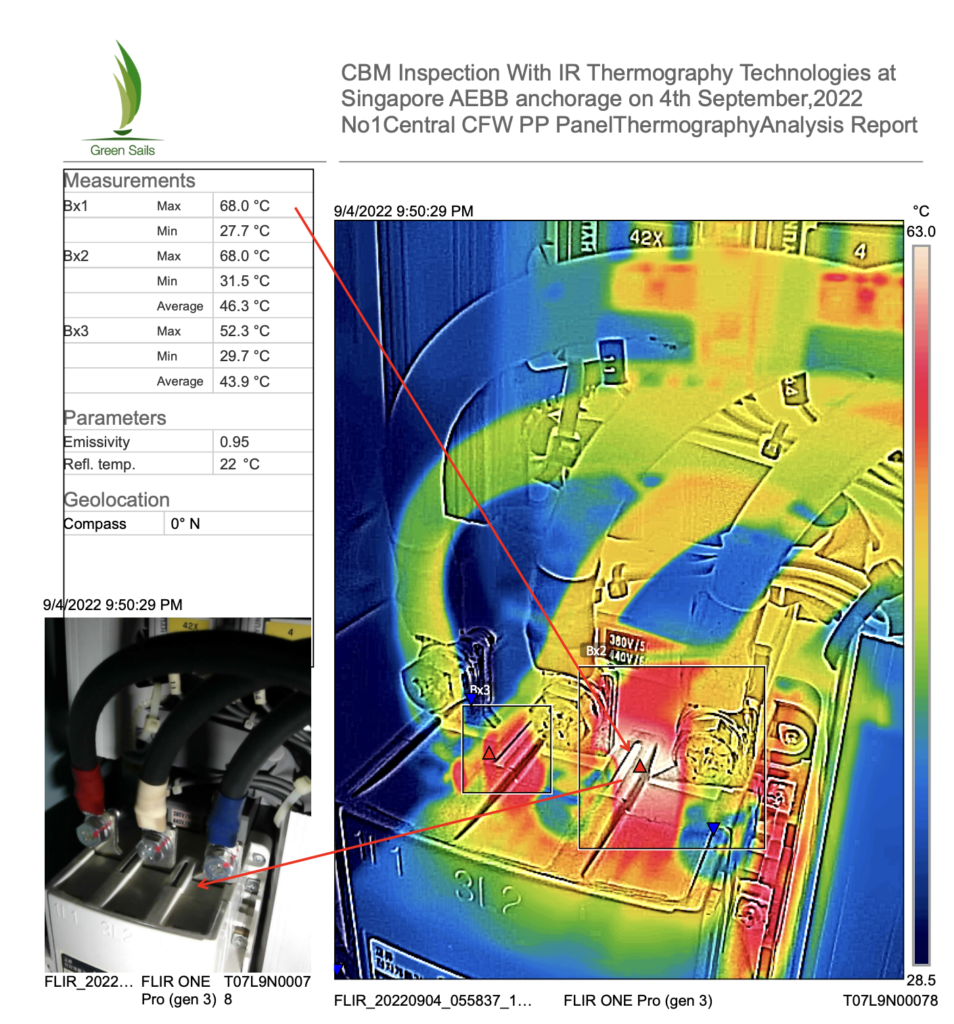
A Second Panel Showed a Similar Developing Condition
During the same thermography inspection, Green Sails also identified abnormal heating at the No.1 Central CFW Pump Panel.
The magnetic contactor measurement reached 68.0°C against a 25°C ambient temperature:
ΔT = 43°C
The report again classified the condition as a thermal anomaly.
Previous measurements on the same panel had recorded maximum temperatures of 63.5°C and 65.2°C.
Findings Summary
No.4 ER Vent Fan Panel
70.2°C maximum
ΔT 45.2°C
Thermal anomaly around contactor/cable connections.
Recommended:
Service magnetic-contactor/MCB-OCR connections, check fastener tightness and clean contacts.
No.1 Central CFW Pump Panel
68.0°C maximum
ΔT 43°C
Abnormal heating associated with the magnetic contactor.
Recommended:
Service magnetic contactor, contacts and coils; inspect L2/L3 area; check connections and fasteners.
No.4 ER Vent Fan Panel
70.2°C maximum
ΔT 45.2°C
At the critical measurement, the panel contactor cable reached 70.2°C against an ambient temperature of 25°C, producing a temperature difference of ΔT 45.2°C. The report identified this as a thermal anomaly and recommended servicing the connections between the magnetic contactor breaker and the MCB-OCR, together with checks for loose fasteners and contaminated or deteriorating electrical contacts
- Maximum temperature: 70.2°C
- Temperature rise: ΔT 45.2°C above the recorded 25°C ambient
- Recommended action: Service the contactor/MCB-OCR connections, check connection tightness and clean affected contacts
No.1 Central CFW Pump Panel
68.0°C maximum
ΔT 43°C
Abnormal heating associated with the magnetic contactor.
The highest recorded temperature of 68°C was compared with the report’s ambient value of 25°C, giving a ΔT of 43°C. The report recommended servicing the magnetic contactor breaker, including its contacts and coils, and specifically noted a possible problem in the L2/L3 contact or coil area. Connections and fasteners were also recommended for tightness checks and contact cleaning.
- Maximum temperature: 68.0°C
- Temperature rise: ΔT 43°C above the recorded 25°C ambient
- Recommended action: Service the magnetic contactor, inspect the L2/L3 contacts or coils, tighten connections and clean affected contacts.
Thermography identified abnormal heating in two separate engine-room electrical panels, with temperature rises exceeding 40°C above the recorded ambient temperature. In both cases, the thermal images allowed the report to move beyond simply identifying a hotspot and provide component-level maintenance recommendations.
Detect the hotspot. Identify the affected component. Recommend the corrective action.